

Introduction
How do commercials or advertisements contribute to brand awareness?
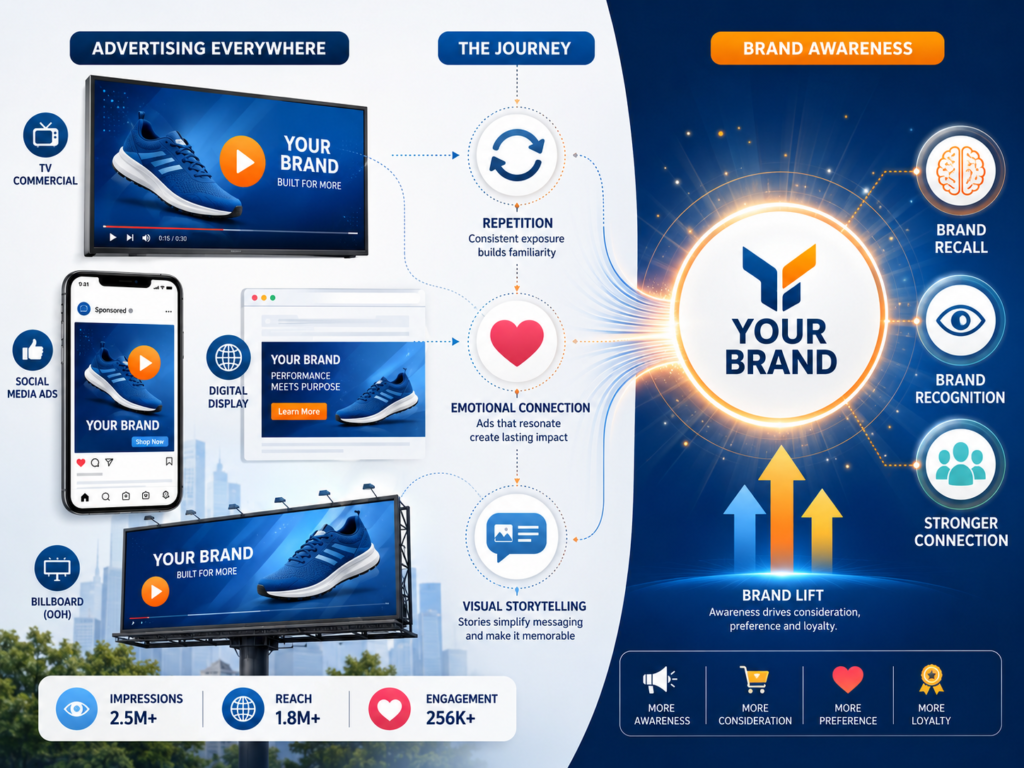
Brand awareness is how well people know and remember a brand. When a business creates ads, its goal is for people to recognize its name, logo, or products. This is called brand recognition. Over time, with repeated ads, people remember the brand without seeing the name. This is called brand recall. Ads help brands stay top of mind. From TV commercials to digital advertising on social media, ads reach many people. Each time someone sees an ad, it is called an impression. Impressions add up and help build brand awareness.
Famous brands often use multiple channels to increase their reach. They combine TV commercials, social media ads, banner ads, and paid ads. Brands want to deliver consistent messaging so people get the same feeling from every ad. Visual storytelling and emotional branding are important too. These create an emotional connection. When people feel something about a brand, they are more likely to remember it.
The Role of Repetition and Engagement
Repetition for recognition is key in advertising. When people see or hear the same message many times, they remember it. Effective frequency means showing ads enough times for people to notice and remember the brand. This is the start of the customer journey. Over time, ads help audiences build trust. They move from brand recognition to brand loyalty.
Brand engagement campaigns invite people to interact with ads. On social media, ads may ask people to like, share, or comment. This engagement is important for measuring brand awareness. Metrics like impressions, reach, and engagement show how ads are working. Surveys and brand lift studies check if people remember the ads.
Measuring Success: Brand Awareness Metrics
Businesses track brand awareness metrics to see if their ads are making an impact. They look at impressions, reach, and engagement. Brand lift measures changes in how people think about a brand after seeing ads. SEO services and digital advertising help brands show up in online searches. Backlinks, website traffic, and search data help measure awareness too.
Using paid ads and SEO together builds brand presence online. Consistent messaging across channels helps people recognize the brand everywhere. Over time, this leads to strong brand identity and lasting customer relationships.
Understanding the Concept of Brand Awareness
What Is Brand Awareness?
Brand awareness means people know and remember a brand. When someone sees a logo or hears a brand name, they know what it is. This is called brand recognition. If they can remember the brand without seeing it, that is called brand recall. Companies want to be at the top of mind for their target audience. This helps customers choose their products first.
Brand identity is how a brand looks and feels. It includes logos, colors, and messages. Advertisements contribute to brand awareness by showing these things often. Consistent messaging is important. When people see the same look and words in TV commercials, digital ads, or on social media, they remember the brand. Repetition for recognition helps people remember.
How Advertising Builds Brand Awareness
Advertising uses many channels to reach people. TV commercials, social media ads, and digital advertising are common. Each channel helps brands reach a different part of their target audience. Paid ads show up in search results and on websites. SEO services help brands appear when people search online. Using multiple channels makes sure more people see the brand.
A brand engagement campaign includes visual storytelling and emotional branding. These help form an emotional connection with people. When a brand tells a story, people remember it better. Effective frequency means showing ads enough times so people remember, but not too much. Advertising frequency matters for building trust and brand loyalty.
Measuring Brand Awareness
To know if ads work, companies use brand awareness metrics. Some important metrics include:
| Metric | What It Shows |
|---|---|
| Impressions | How often ads appear |
| Reach | How many people see |
| Engagement | Likes, shares, clicks |
| Brand Lift | Change in brand views |
| Brand Recall | Remembering a brand |
Advertisers track impressions and reach to see how many people notice their ads. Engagement shows if people interact with the brand. Brand lift tells if people think better of the brand after ads are shown. Surveys help measure brand recall and brand recognition. Using these brand awareness metrics helps brands see if their campaigns are working.
The Power of Impressions in Advertising
What Are Impressions and Why Do They Matter?
Impressions show how many times an ad appears in front of people. Impressions help show ad contribution to brand awareness. Each time someone sees a TV commercial or a digital ad, it counts as an impression. High impressions mean your brand gets noticed more often.
When brands use social media ads, they can reach a bigger target audience. Impressions show if your message is getting out there. More impressions often lead to better brand recall and brand recognition.
Impressions Across Multiple Channels
Using many channels like TV commercials, social media ads, and digital advertising spreads your message. This helps people remember your brand. Multiple channels mean you can reach people wherever they are in their customer journey.
Each channel adds more impressions, building a strong brand identity. Paid ads and SEO services also boost impressions. These tools help keep your brand top of mind and support brand engagement campaigns.
How Impressions Build Brand Awareness
Repetition for recognition is key. Seeing ads many times builds a connection. When people see your brand often, they start to remember it. This is how advertising builds brand awareness.
Impressions support consistent messaging and visual storytelling. Ads with clear stories help brand recall. Emotional branding in ads creates lasting feelings. This can lead to brand loyalty and better engagement.
Measuring Brand Awareness With Impressions
Brands use metrics to track success. Here are important brand awareness metrics:
| Metric | What It Measures |
|---|---|
| Impressions | Number of times an ad is seen |
| Reach | Unique people who see the ad |
| Engagement | Likes, shares, or comments |
| Brand Lift | Change in how people view a brand |
Tracking these helps brands see if their ads work. Effective frequency, or how often people see your ad, matters. Too few views may not help. Too many can annoy. The right balance builds strong brand awareness.
TV Commercials: A Traditional Yet Effective Medium
How TV Commercials Build Brand Awareness
TV commercials have long played a major role in the ad contribution to brand awareness. Seeing a brand on TV helps people recognize it, remember it, and trust it. TV commercials use visual storytelling, music, and strong images to form an emotional connection with the target audience. This emotional branding keeps brands top of mind and boosts brand recall.
Repetition for recognition is a key method used in TV advertising. When a commercial plays many times, viewers are more likely to remember the brand. This process, called effective frequency, helps create brand recognition. Consistent messaging across commercials also strengthens brand identity and supports brand lift.
Reaching the Audience Through Multiple Channels
TV commercials reach millions at once, making them great for broad campaigns. Even with the rise of digital advertising and social media ads, TV still brings strong results in brand engagement campaigns. Many brands use both paid ads like TV and digital channels to maximize their reach. This approach ensures the brand stays present throughout the customer journey.
Combining TV commercials with SEO services and digital advertising is powerful. Brands often see higher impressions, better engagement, and stronger brand loyalty. Using multiple channels creates more touchpoints with the audience, which increases the impact of each advertisement. This gives a bigger boost to brand awareness metrics like reach, impressions, and engagement.
Measuring TV Commercial Impact on Brand Metrics
To understand how advertising builds brand awareness, brands track several key metrics. These include impressions (how many times the commercial is seen), reach (how many people see it), and engagement (how the audience reacts). Brand lift measures how much more people remember or prefer the brand after seeing the ad. Surveys and studies help check the impact of TV commercials on brand recall and recognition.
Here is a simple table showing examples of brand awareness metrics:
| Metric | What It Shows |
|---|---|
| Impressions | Number of times the ad is viewed |
| Reach | Number of unique viewers |
| Brand Lift | Increase in brand recall/recognition |
| Engagement | Audience actions during/after ad |
How Advertising Builds Brand Awareness: 5 Core Mechanisms
1. Repetition and Recognition
Advertising works best when people see a brand many times. This is called repetition for recognition. TV commercials, paid ads, and digital advertising show the same logo and message often. When the target audience sees the brand again and again, it sticks in their memory. This helps with brand recall. The more often someone sees a brand, the more likely they are to remember it when making choices.
Effective frequency is key. Most people need to see an ad several times before they recognize and trust the brand. Using multiple channels boosts the chances that the brand stays top of mind. Platforms like social media ads, TV, and online banners help reach more people with consistent messaging.
2. Emotional Connection and Storytelling
Many ads use stories to connect with people. Visual storytelling, music, and strong images can make viewers feel something about a brand. This is emotional branding. Ads that tell meaningful stories help build trust and long-term brand loyalty. When consumers feel connected, they are more likely to engage with the brand throughout their customer journey.
Brand engagement campaigns on social media can spark conversation, sharing, and excitement. People remember brands that make them feel happy, inspired, or understood. Emotional connection is a powerful way advertising contributes to brand awareness and creates loyal customers.
3. Broad Reach and Measurable Metrics
Advertising reaches large audiences fast. TV commercials, digital ads, and SEO services put the brand in front of new people every day. Using many channels at once widens reach and helps the brand find its target audience wherever they are.
Marketers track key brand awareness metrics to see how ads perform. Common measures include impressions, reach, engagement, brand lift, and website traffic. Social media ads and digital advertising give real-time data. This helps brands adjust their messages for better results. Seeing more impressions and higher engagement means advertisements contribute to brand awareness and growth.
The Rise of Digital Advertising and Social Media Ads
How Digital Advertising Builds Brand Awareness
Digital advertising has changed how ads contribute to brand awareness for all businesses. Today, brands use paid ads and SEO services to reach their target audience across multiple channels. With digital tools, brands can create consistent messaging and use visual storytelling to build a strong brand identity. These methods help companies appear in more places and connect with more people.
Brand awareness grows as people see a brand over and over again. Digital advertising uses effective frequency and repetition for recognition, making sure the brand is always top of mind. This repetition helps with brand recall and brand recognition. Popular channels like display ads, search ads, and video ads make it easier for brands to reach their target audience and build brand loyalty.
The Power of Social Media Ads
Social media ads play a big role in how advertisements contribute to brand awareness. Sites like Facebook, Instagram, and TikTok let brands run brand engagement campaigns aimed at specific groups. This targeted approach increases reach and engagement. With social media ads, brands can measure brand awareness metrics such as impressions, engagement, and brand lift.
Visual storytelling and emotional branding are important on social media. Brands use images and short videos to quickly connect with viewers. These posts help form an emotional connection, which helps people remember the brand. Repetition and consistent messaging keep the brand in front of customers, helping with brand recall and recognition.
Measuring Success: Key Brand Awareness Metrics
Measuring how advertising builds brand awareness is easier with digital tools. Brands can track impressions, reach, and engagement to see how well their ads are working. Website traffic, click-through rates, and social shares also show results. Some companies even track brand lift to see if ads change how people feel about the brand.
A simple table of brand awareness metrics:
| Metric | What It Measures |
|---|---|
| Impressions | How often an ad is seen |
| Reach | Number of unique viewers |
| Engagement | Likes, shares, comments |
| Brand Lift | Change in brand feelings |
| Recall | People remembering brand |
Effective digital ad strategies help brands guide people through the customer journey. By using multiple channels and measuring results, brands build strong connections and lasting loyalty.
Creating a Consistent Brand Identity
Why Consistency Matters in Brand Identity
A consistent brand identity helps people remember your business. Every time someone sees your logo or hears your slogan, it should look and sound the same. This is how advertising builds brand awareness. Repetition for recognition is key. When your ads appear on multiple channels, such as TV commercials, social media ads, or digital advertising, you want your message to stay the same. This makes it easier for the target audience to recognize and recall your brand. Consistent messaging leads to brand recall. This means customers can remember your brand even without seeing your products.
Brand engagement campaigns work better when the brand identity is clear and consistent. Using the same colors, fonts, and style across all ads supports brand recognition. Impressions from repeated ads increase brand lift. Each ad contribution to brand awareness is stronger when the look and message don’t change. This helps keep your brand top of mind for customers. When people see your brand often, they begin to trust it more. This is the first step toward brand loyalty.
The Power of Visual Storytelling and Emotional Branding
Visual storytelling is a strong tool in advertising campaigns. Using images, videos, and graphics can connect with people’s feelings. Emotional branding creates a deeper bond with the target audience. When ads show real stories or happy emotions, they make people feel good about the brand. TV commercials and digital ads often use strong visuals to grab attention. This approach can help with brand engagement and even boost metrics like impressions and reach.
An emotional connection helps customers remember a brand better. Paid ads and social media ads that tell stories stand out. When these ads use the same visuals and messages, they strengthen brand recall. People often act when they feel connected, leading them forward on the customer journey. Brands that use emotional branding in every ad contribute to brand awareness and loyalty.
Measuring Consistency with Brand Awareness Metrics
To see if a brand identity stays consistent, brands use brand awareness metrics. These include impressions, reach, engagement, and brand lift. Tracking these helps you know if people are seeing and reacting to your ads. For digital advertising, metrics from social media ads and paid ads show how many people notice your brand. TV commercials also have ways to measure audience size. Combining these numbers tells if your brand is staying top of mind.
SEO services help keep your brand visible online. When ads and website content match, it helps with brand recall. Effective frequency, or how often someone sees your ad, is important. Too few impressions may lead to missed connections. Too many can make ads seem annoying. Finding the right balance in advertising frequency helps keep your brand visible without overwhelming the target audience.
The Customer Journey: From Ad Awareness to Brand Loyalty
Step One: Seeing the Brand—Ad Awareness
The customer journey begins when people first spot an ad. This could be a TV commercial, digital advertising, or social media ads. At this stage, ad contribution to brand awareness is very important. Advertisements contribute to brand awareness by putting the brand in front of the target audience again and again. This repetition for recognition creates more impressions, which is one of the key brand awareness metrics.
Companies use multiple channels to reach people, such as paid ads, TV commercials, and SEO services. Social media ads can catch attention with bright images or catchy videos. Consistent messaging across all these platforms helps build brand identity, making it easier for people to remember the brand.
Step Two: Building Connections; Recognition and Engagement
After seeing the ads, people begin to remember the brand. This is called brand recognition. When advertising builds brand awareness, it also helps with brand recall—remembering the brand when it matters. Visual storytelling and emotional branding are tools used in digital advertising to create an emotional connection. When customers feel something, they are more likely to become interested and engage with the brand.
Brand engagement campaigns and social media ads invite people to like, comment, or share. Each interaction builds a stronger bond. Using advertising frequency, brands stay top of mind for the audience. This stage uses metrics like reach, engagement, and brand lift to measure how well ads are working.
Step Three: Trust and Loyalty—From Awareness to Advocacy
When customers recognize and trust the brand, they move to the next step—brand loyalty. Consistent messaging and effective frequency make the brand familiar and trusted. Over time, repeated exposure helps the brand stand out when people are ready to make a choice.
Strong brand awareness leads to loyalty, where customers return and even recommend the brand to others. This journey, from first impression to loyal fan, shows how advertising builds brand awareness and keeps the brand top of mind for the target audience. Brands track the journey with metrics like impressions, brand lift, and website traffic to improve future campaigns.
Conclusion
How Advertising Builds Brand Awareness
Advertising is a key part of making sure people know and remember a brand. TV commercials, social media ads, and digital advertising all work together to let the target audience see the brand in different places. Ads help brands stay top of mind by showing their logo, colors, and message again and again. This repetition for recognition helps create brand recall and brand recognition.
Brand engagement campaigns use visual storytelling and emotional branding to make people feel connected to a brand. When ads use the right images and messages, they build an emotional connection with customers. This connection makes it easier for people to trust and remember the brand over time.
The Role of Multiple Channels and Metrics
Using multiple channels like TV, social media, and search ads increases the reach of advertisements. Each channel has its own way of showing ads to the target audience. Social media ads are good for quick engagement, while TV commercials help with wider reach. Paid ads and SEO services work together to bring in both paid and organic traffic.
It’s important to track how these ads work using brand awareness metrics. Useful metrics include impressions, engagement, brand lift, and website traffic. Tracking these metrics helps brands know if their advertising is working. The table below shows common brand awareness metrics:
| Brand Awareness Metric | What It Measures |
|---|---|
| Impressions | How often ads are seen |
| Reach | How many people see ads |
| Engagement | Likes, shares, comments |
| Brand Lift | Changes in brand opinion |
| Website Traffic | Visits to a brand’s site |
Creating Lasting Brand Identity and Loyalty
Consistent messaging across all ads helps people remember the brand. Visual storytelling, clear branding, and effective frequency keep the brand identity strong. Emotional branding and repeated messages help brands connect with customers at every step of their journey.
Great advertising is not just about selling. It’s about building brand loyalty. When people see ads often, trust grows. Over time, this leads to customers picking the brand first. By using multiple channels, measuring results, and keeping the message clear, advertisements contribute to brand awareness in powerful ways.
FAQ
What is brand awareness?
Brand awareness means how well people know and remember a brand. It includes brand recognition (knowing the brand when seeing its name or logo) and brand recall (remembering the brand without seeing it).
How does advertising build brand awareness?
Advertising uses multiple channels such as TV commercials, social media ads, and digital advertising to repeatedly show a brand’s logo, colors, and message. This repetition helps people recognize and recall the brand, creating an emotional connection and building trust over time.
What is the role of repetition in advertising?
Repetition, or effective frequency, means showing ads enough times so people notice and remember the brand. It is key to moving audiences from brand recognition to brand loyalty.
What are brand engagement campaigns?
Brand engagement campaigns invite people to interact with ads by liking, sharing, or commenting, especially on social media. These interactions help build a stronger connection with the brand and measure brand awareness.
What are the key metrics used to measure brand awareness?
Important brand awareness metrics include impressions (how often ads appear), reach (how many unique people see the ads), engagement (likes, shares, clicks), brand lift (changes in brand perception), brand recall (remembering the brand), and website traffic.
Why are impressions important in advertising?
Impressions count how many times an ad is shown to people. More impressions mean the brand is noticed more often, helping increase brand recognition and recall.
How do multiple advertising channels affect brand awareness?
Using multiple channels like TV, social media, paid ads, and SEO services increases brand reach. Each channel adds more impressions and touchpoints, strengthening brand identity and keeping the brand top of mind.
How do TV commercials contribute to brand awareness?
TV commercials use visual storytelling, music, and strong images to create emotional connections. Repeated airing of commercials helps with brand recognition and supports brand lift by reaching large audiences.
How does digital advertising help with brand awareness?
Digital advertising allows brands to reach targeted audiences through paid ads and SEO services across various platforms. It supports consistent messaging and visual storytelling to build brand identity and loyalty.
What is the importance of consistency in brand identity?
Consistent use of logos, colors, fonts, and messaging across all ads helps people recognize and remember the brand easily. This consistency strengthens brand recall and builds trust with customers.
How does emotional branding impact brand awareness?
Emotional branding uses stories, visuals, and music to create feelings and connections with the audience. When people feel emotionally connected, they are more likely to remember and engage with the brand.
What is brand lift and how is it measured?
Brand lift measures changes in how people think or feel about a brand after seeing advertising. It is tracked through surveys, studies, and metrics like engagement and recall.
What is the customer journey in relation to brand awareness?
The customer journey starts with ad awareness (seeing the brand), moves to recognition and engagement (remembering and interacting with the brand), and leads to trust and loyalty where customers choose and recommend the brand.
How do social media ads contribute to brand awareness?
Social media ads target specific groups to increase reach and engagement. They use visual storytelling and emotional branding to build connections and help with brand recall and recognition.
Why is measuring brand awareness important?
Measuring brand awareness helps businesses understand if their advertising efforts are effective. Tracking metrics like impressions, reach, engagement, and brand lift allows brands to adjust campaigns for better results.
What is effective frequency in advertising?
Effective frequency is the optimal number of times a person needs to see an ad to recognize and remember the brand without causing annoyance. It balances repetition to build brand awareness and trust.
How do SEO services support brand awareness?
SEO services help brands appear in online searches, increasing website traffic and visibility. When combined with paid ads and consistent messaging, SEO supports brand recall and contributes to overall brand presence.
How does visual storytelling enhance advertising?
Visual storytelling uses images, videos, and graphics to convey a brand’s message and evoke emotions, making ads more memorable and helping build stronger brand connections.
What role does brand engagement play in building loyalty?
Brand engagement through interactions like shares and comments strengthens emotional connections, leading customers from awareness to loyalty and advocacy for the brand.