

Did you know over 76% of small businesses lose their entire PPC budget because of mistakes? Starting with PPC ads can be tricky. It’s key to know the common errors that can hurt your campaign and waste your budget. This guide will show you the top 6 common PPC mistakes to avoid in your first PPC campaign. It will help you improve your ads and get the best return on investment (ROI).
Key Takeaways
- Understand the fundamental components of a successful PPC campaign
- Recognize the common pitfalls that new advertisers often struggle with
- Learn how to conduct effective keyword research and implementation
- Optimize your campaign settings and ad structure for maximum efficiency
- Craft compelling ad copy and landing pages to improve conversion rates
- Implement robust tracking and analytics to make data-driven decisions
- Manage your budget and bidding strategy effectively
Understanding the Fundamentals of PPC Advertising
Starting with the basics is key for beginners in PPC. PPC, or pay-per-click advertising, is a digital marketing tool. It helps businesses reach their audience on search engines and online platforms. New advertisers need to know the main parts of PPC campaigns to succeed.
Key Components of a Successful PPC Campaign
The main parts of a good PPC campaign are:
- Keyword research and selection
- Ad creation and optimization
- Bidding and budget management
- Landing page design and user experience
- Comprehensive tracking and analytics
Learning these basics helps new PPC advertisers improve their campaigns. They can aim for more website traffic, leads, or sales.
Why New Advertisers Struggle with PPC
Many new advertisers find PPC challenging. But there are tips to help them:
- Do deep keyword research to find the best terms.
- Make ad copy and landing pages that speak to your audience.
- Manage your budget and bids well to get the most value.
- Use strong tracking and analytics to see how your campaigns do.
Knowing these basics and avoiding common mistakes helps new PPC advertisers. They can then launch and improve their campaigns for lasting success.

Mastering PPC strategies and optimizing campaigns is vital for beginners. They can use PPC to achieve real business results with the right skills.
Common PPC Mistakes That Drain Your Budget
Starting with pay-per-click (PPC) ads can be tough, even for first-timers. The promise of rewards is great, but one mistake can quickly empty your budget. We’ll look at common PPC errors that can hurt your ad spend and share ways to dodge them.
Poor targeting is a big-budget killer. Using too broad keywords can lead to irrelevant clicks and wasted money while targeting them too narrowly can cause you to miss your audience.
- It’s key to do deep keyword research and know what people are searching for.
- Using different keyword match types can help you target better and save money.
Another big mistake is ineffective ad copy. Bad headlines, descriptions, and calls to action can keep people from clicking, which means more impressions and a higher cost-per-click (CPC).
To fix this, make your ad copy compelling and focused on benefits. Talk directly to what your audience needs and wants. Try out different versions to see what works best, and keep improving your ads based on their performance.
| PPC Management Best Practices | Mistakes to Avoid |
|---|---|
| Targeted Keyword Research | Broad, Irrelevant Keywords |
| Optimized Ad Copy | Bland, Uninspiring Ads |
| Continuous Campaign Monitoring | Set-and-Forget Mentality |
| Flexible Budget Allocation | Inflexible Budgets |
By avoiding these common mistakes in pay-per-click advertising, you can make your first PPC campaign a success. Stay alert, keep tweaking your approach, and your budget will appreciate it.

1- Poor Keyword Research and Implementation
Good PPC campaigns start with solid keyword research and smart use. But, many new advertisers skip this step, leading to bad results and wasted money. Knowing the difference between long-tail and short-tail keywords is key and matching them with what users seek.
Long-tail vs. Short-tail Keywords
Short-tail keywords are broad and popular but also very competitive and pricey. Though less searched, long-tail keywords bring in more focused traffic and better conversion rates. Mixing both types helps target a wide range of searches effectively.
Keyword Match Types Explained
Understanding different keyword match types is vital. Broad match catches a lot of traffic but can include irrelevant searches. The exact match is precise but limits your reach. Using a mix of these types helps balance relevance and budget.
Search Intent Optimization
Your PPC campaign aims to reach users looking for what you offer. Knowing what drives a user’s search is key. By matching your keywords, ads, and landing pages with user intent, you create a better experience that boosts conversions and saves money.
Ignoring the details of keyword research and use can be a big mistake for PPC newbies. You set up your campaign for success and profit by following these basics.
2- Neglecting Campaign Settings and Structure
Creating a successful PPC campaign involves more than great ad copy and the right keywords. It’s also about setting up your campaign settings and structure correctly, which can make a big difference in the success of your campaign.
One big mistake is not targeting the right places. This can waste money and hurt your campaign’s performance. To avoid this, do your homework on the market, look at user data, and keep tweaking your targeting.
Another key area is ad scheduling. Running ads at the right times can help you reach more people. This is super important for businesses with small budgets or in very competitive markets.
- Optimize your geo-targeting settings to reach the right audience
- Utilize ad scheduling to ensure your ads are displayed during peak times
- Organize your campaigns and ad groups in a logical, easy-to-manage structure
You can improve your first PPC campaign by focusing on the details of campaign settings and structure. A successful PPC strategy is not just about a good ad. It’s about a well-planned and well-executed campaign.
| PPC Campaign Setting | Importance | Best Practices |
|---|---|---|
| Geo-targeting | Ensures your ads are shown to the right audience in the right location | Conduct thorough market research, analyze user data, and regularly review and adjust settings |
| Ad Scheduling | Helps you reach your target audience during peak times | Use data to determine the best times and days to run your ads |
| Campaign Structure | Organizes your ads and ad groups for better management and optimization | Create a logical, easy-to-navigate structure that aligns with your business goals |
Mastering campaign settings and structure can boost your first PPC campaign’s success. This helps you avoid mistakes like bad geo-targeting. It also means you’ll get more out of your investment and hit your marketing goals.
3- Creating Ineffective Ad Copy and Landing Pages
Quality ad copy and landing pages are key to a successful PPC campaign. Many new PPC advertisers struggle with these, wasting their budgets because they don’t drive the necessary conversions.
Writing Compelling Ad Headlines
The headline is the most important part of your ad copy. It must grab the user’s attention and show the value. Don’t use boring headlines that blend in. Instead, create unique headlines that speak to your audience’s needs.
- Highlight the key benefits of your product or service
- Use powerful words that evoke emotion and a sense of urgency
- Keep headlines concise and easy to digest at a glance
Optimizing Landing Page Experience
Your landing page is where users decide to convert or bounce. It’s essential to make it seamless and high-converting. Avoid mistakes like poor design and confusing content.
- Align the messaging and visuals on your landing page with your ad copy
- Simplify the layout and user flow to guide visitors toward your desired action
- Optimize your landing page for mobile devices, as many users will access it on the go
You can avoid common PPC pitfalls by focusing on great ad copy and landing pages. This sets your campaigns up for success.
“The difference between a mediocre PPC campaign and a high-performing one often comes down to the quality of the ad copy and landing page experience.”
4- Ignoring Tracking and Analytics Setup
Running a successful PPC campaign means not ignoring tracking and analytics. Lacking conversion tracking and failing to analyze PPC performance metrics hurts your campaign’s success.
Conversion tracking shows how your ads perform and which ones are most valuable. Without it, you can’t make smart budget decisions or improve your campaign.
Analyzing PPC performance metrics like CTR, CPC, and ROAS is key. It helps you see which ads and keywords work best. This way, you can focus on what’s effective and improve what’s not.
- Make sure your website and landing pages have proper conversion tracking setup
- Check your key performance metrics often to find ways to improve
- Use data to guide your decisions on budget, bids, and ad/keyword tweaks
| Metric | Explanation | Importance for PPC |
|---|---|---|
| Click-Through Rate (CTR) | The percentage of impressions that result in a click on your ad | Shows how relevant and appealing your ad is to users |
| Cost-Per-Click (CPC) | The average amount you pay for each click on your ad | Helps you manage your ad costs and strategy |
| Return on Ad Spend (ROAS) | The revenue generated for every dollar spent on advertising | Measures your PPC campaigns’ profitability and efficiency |
Fixing these PPC mistakes and focusing on tracking and analytics can improve your campaigns, leading to better results.
5- Improper Budget Management and Bidding Strategy
Managing your budget and bidding strategy well is key to a good return on investment (ROI). Many new advertisers make mistakes, leading to insufficient budget allocation and incorrect bid strategy. Knowing these mistakes helps improve your campaign’s performance.
Understanding Bid Adjustments
Bid adjustments are a vital part of a good PPC bidding strategy. They let you adjust bids based on device, location, time, etc. Yet, many struggle to use this feature well, making incorrect bid strategy choices that hurt their campaigns.
Budget Allocation Best Practices
- Study your target audience’s behavior to find the best budget split for different channels, devices, and ad spots.
- Keep a close eye on your campaign’s performance and adjust your budget allocation as needed to maximize impact.
- Use automated bidding strategies like target ROAS or target CPA to adjust bids and improve your PPC bidding mistakes.
Understanding the importance of proper budget management and bidding strategy is essential. By following best practices, you can avoid common PPC bidding mistakes that waste your budget and harm your campaign’s success.
6- Overlooking Ad Extensions and Enhanced Features
In the world of PPC advertising, using every tool is key to standing out. Many new advertisers miss out on ad extensions and enhanced features, which can make ads more visible, increase clicks, and bring more site visitors.
Ad extensions add extra info to your ads, like site links and callouts. They give users more context, making your ads more appealing. You can improve your campaigns and avoid common first PPC campaign mistakes by using ad extensions well.
PPC platforms also have enhanced features to help with targeting and ad performance. These include audience targeting and automated bidding. Using these, you can make ads more personal and effective, leading to better results for your business.
To succeed in PPC, always try new strategies and features. Don’t make the mistake of ignoring ad extensions and enhanced features. This way, you can fully use your PPC campaigns and stay ahead.
Conclusion
As I’ve outlined throughout this article, avoiding common pitfalls is key to the success of your first PPC campaign. Mastering PPC basics, like keyword research, ad copy, and budgeting, is essential. This will set you up for long-term success.
Focus on optimizing your campaigns to maximize return on investment. Use best practices for keyword targeting, ad creation, and budgeting. Also, make the most of analytics and tracking tools.
Remember, effective PPC strategies for beginners require ongoing learning. Stay updated, adapt to industry changes, and keep improving your PPC campaign errors to avoid them. Following this advice will optimize your PPC campaigns and reach your goals.
FAQ
What are the most common mistakes to avoid in my first PPC campaign?
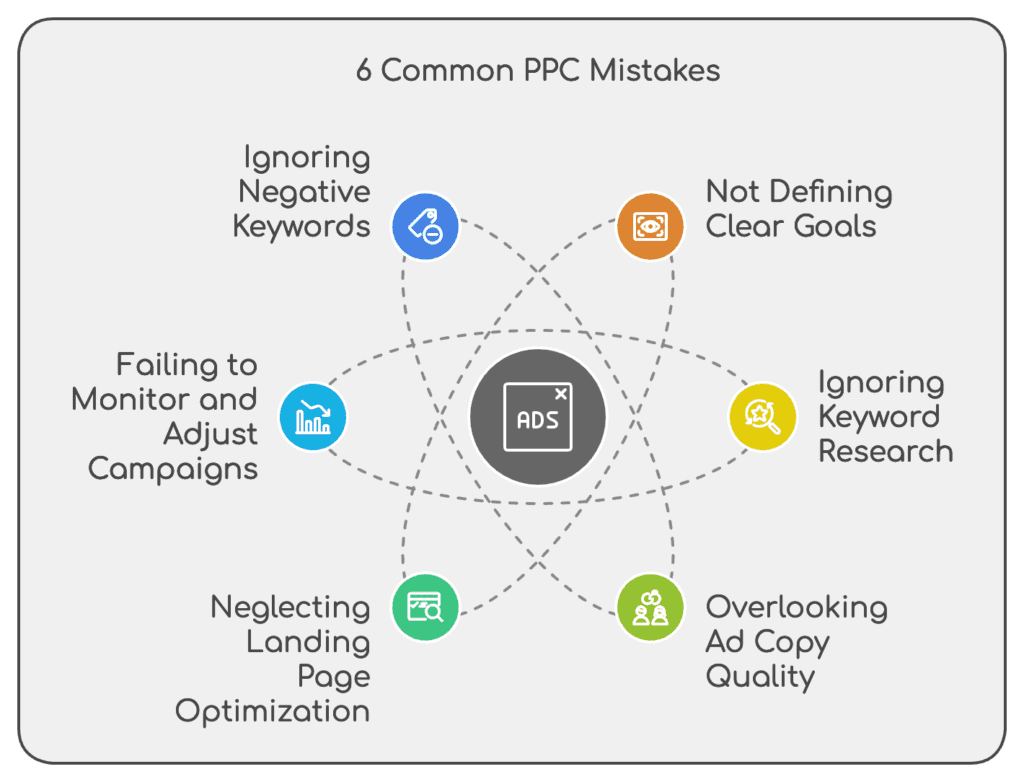
Common mistakes in your first PPC campaign include using the wrong keywords and writing bad ad copy. Also, picking the wrong bid strategy and ignoring negative keywords are big no-nos. Don’t forget about ad extensions, conversion tracking, and geo-targeting.
Make sure you have enough of a budget and don’t forget about remarketing.
Why is keyword targeting important in PPC?
Keyword targeting is key in PPC because it shows your ads to the right people. You waste money and get poor results if you target the wrong keywords.
What should I avoid when starting a PPC campaign?
Avoid mistakes like using irrelevant keywords and writing bad ad copy. Also, don’t pick the wrong bid strategy or ignore negative keywords. Don’t forget about ad extensions and setting up conversion tracking.
How can I improve my first PPC campaign?
Start with good keyword research and compelling ad copy to improve your first PPC campaign. Set up conversion tracking and optimize your bids. Use ad extensions and monitor your campaign’s performance.
What are the most common mistakes in PPC?
Common PPC mistakes include using the wrong keywords and writing bad ad copy. Picking the wrong bid strategy and ignoring negative keywords are also big errors. Don’t forget about ad extensions, conversion tracking, and geo-targeting.
Make sure you have enough of a budget, and don’t overlook remarketing.
How can I ensure success in my first PPC campaign?
To succeed in your first PPC campaign, avoid common mistakes like using the wrong keywords and writing bad ad copy. Pick the right bid strategy, and don’t ignore negative keywords. Remember ad extensions, conversion tracking, and geo-targeting.
Understand PPC basics, do thorough research, and optimize based on data.