

Decoding the Brand Halo Effect: More Than a First Impression
Understanding the Brand Halo Effect and Its Roots
The Brand Halo Effect is a powerful force in marketing. It means when you feel good about one thing a brand does, you believe other things from that brand are good too. Edward Thorndike, a famous psychologist, first found this idea. He called it a cognitive bias. This bias helps people make quick judgments based on first impressions. If a product looks high quality, people think the brand is trustworthy and has strong brand authority.
Brand reputation grows as the brand halo spreads. Consumers link positive feelings from one product to the whole brand. This can shape brand identity and brand consistency. When customers feel an emotional connection, they build brand loyalty. They also trust the brand more and become brand advocates.
How the Halo Effect Shapes Consumer Choices
Brand halo effect plays a big role in buying choices. Good first impressions can affect all products a brand offers. The perceived quality of one product can make other products seem better too. This is called the spillover effect. It increases brand affinity and helps with brand positioning.
Companies use this effect for product line extension. If a snack brand is seen as healthy, new snacks from that brand will be trusted. Cross-selling becomes easier. The brand halo helps push customers to try more products.
The opposite is the horn effect. If the first impression is bad, people avoid the brand’s products. That is why brand consistency and a strong customer experience (CX) matter.
Building Trust and Loyalty Through the Halo Effect
Brand halo effect builds consumer trust. It raises brand equity and brand reputation. Strong brand association and social proof help people feel safe with their choices. When brands keep promises, customers stay loyal. This leads to better customer retention and brand advocacy.
Marketing strategy often uses the halo effect. Brands aim for cognitive consistency. They match messages, design, and tone to build trust. People connect emotionally with brands that feel stable and familiar. The psychology of marketing uses the halo effect to increase consumer perception and create lasting bonds.
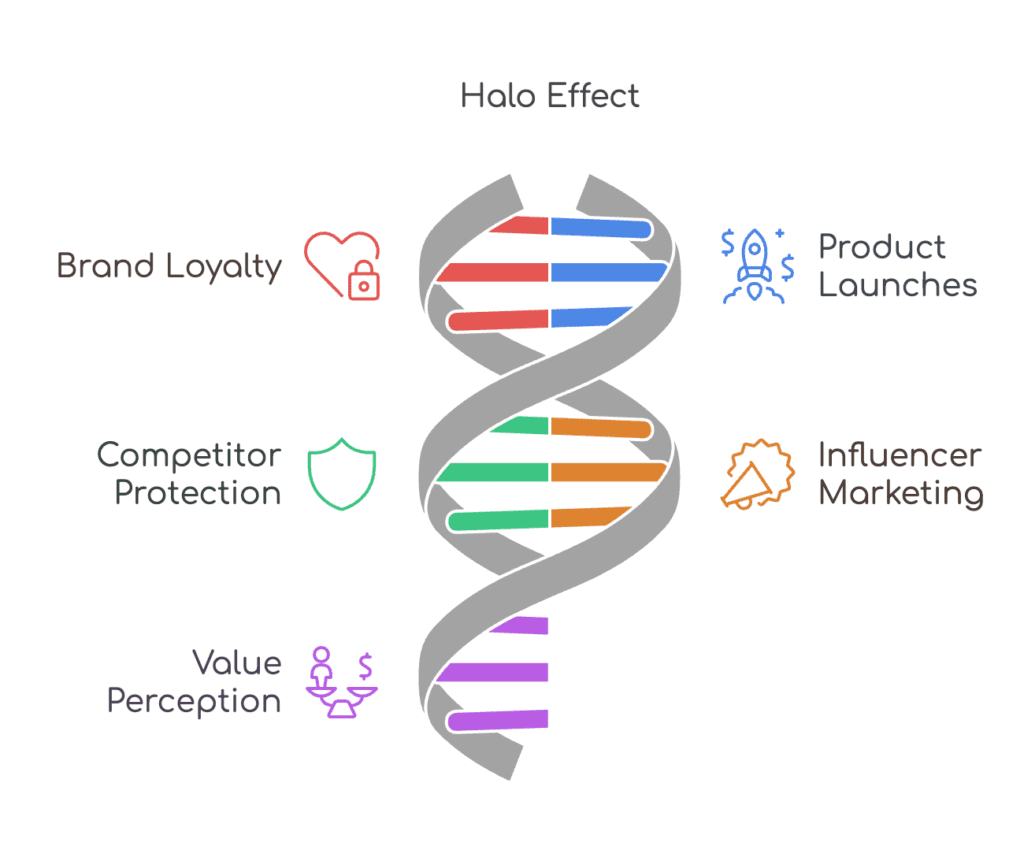
The Thorndike Legacy: How 1920s Psychology Built Modern Giants
Edward Thorndike and the Start of the Brand Halo Effect
Edward Thorndike was a famous psychologist in the 1920s. He first noticed a pattern that changed marketing: the Brand Halo Effect. Thorndike saw that people often judge one part of something and let that feeling spread to the whole thing. For example, if a person thinks a product looks nice, they might also believe it works well. This is a cognitive bias. It shapes consumer trust and consumer perception. Thorndike’s idea helps explain why people form strong brand associations and brand affinity.
The Halo Effect means first impressions matter. Brands use this in their marketing strategy. If a product shows high perceived quality, people trust other products from the same brand. This helps brand equity and brand reputation grow stronger. The Brand Halo Effect also works the other way as the Horn effect. If a customer has a bad experience, it can hurt all products in the line.
The Halo Effect in Modern Branding
Many big brands use the Brand Halo Effect in their marketing strategy today. They build a strong brand identity and keep brand consistency across all products. When customers see quality in one item, they expect quality in others. This drives customer retention and brand loyalty. Brands use social proof, such as awards or celebrity backing, to show brand authority and increase trust.
The Halo Effect also helps with product line extension and cross-selling. If parents trust a brand’s baby shampoo, they might also buy the brand’s baby lotion. This spillover effect helps companies grow. Good customer experience (CX) ties to emotional connection and brand advocacy. Loyal customers share their positive views, helping the brand gain more fans.
Thorndike’s Influence on Marketing Tactics
Thorndike’s work led to key ideas in the psychology of marketing. Brands focus on cognitive consistency, making sure all touchpoints feel the same. Marketers shape brand positioning to win first impressions and guide purchasing decisions. They use brand associations to boost brand affinity and influence consumer perception.
Below is a table showing how brands use Thorndike’s ideas today:
| Thorndike’s Concept | Modern Usage Example |
|---|---|
| Brand Halo Effect | Apple’s product launches |
| Cognitive Consistency | Nike’s “Just Do It” slogan |
| Social Proof | Amazon’s user reviews |
The Mechanics of Spillover: How One Product Sells the Entire Line
How the Brand Halo Effect Works in a Product Line
The Brand Halo Effect is a type of cognitive bias. It means when people have a good first impression of one product, they start to trust the whole brand. This trust can lead to stronger brand loyalty and higher consumer trust. For example, if a customer loves a brand’s phone, they may want to try the brand’s headphones too. This spillover effect helps companies sell more items from their product line extension.
Companies use brand consistency to make sure that every product feels like part of the same family. Common colors, logos, and design keep brand identity strong. When people see these, it makes them feel more brand affinity and trust. This helps with cross-selling and customer retention, as new products are linked to the good feelings from the first product.
The Role of Perceived Quality and Brand Reputation
Perceived quality shapes how customers see the rest of the product line. If one product wins an award or gets lots of social proof, people believe the other products are good too. Brand reputation grows, building brand equity and stronger brand authority. Edward Thorndike, a famous psychologist, explained this with his study on cognitive bias. The Brand Halo Effect is the positive form, while the Horn effect can hurt a brand if a product fails.
When customers feel an emotional connection to a product, they may become brand advocates. This helps spread positive brand association with word of mouth. The more positive the customer experience (CX), the more likely people are to recommend the brand. This creates a cycle of brand loyalty that strengthens with each new buying decision.
Why Consistency and Psychology Matter in Brand Positioning
Brands use marketing strategy and brand positioning to guide how people see their products. Consistent messaging makes customers feel safe and builds trust. This can lead to higher brand affinity and better purchasing decisions. The psychology of marketing uses first impressions to anchor people’s minds. When there is cognitive consistency, people feel better about sticking with the brand.
Spillover helps brands grow. Happy customers often try other products in the line. This effect boosts customer retention and brand advocacy. With strong brand authority and a good customer experience, the positive Brand Halo Effect can help a single great product sell the entire line.
The Dark Side: Understanding the Horn Effect and Brand Dilution
What Is the Horn Effect?
The Horn effect is the opposite of the Brand Halo Effect. It happens when a negative impression from one area of a brand hurts how people see the whole brand. Edward Thorndike, a psychologist, first described this cognitive bias. When people see something bad about a brand, it can lower perceived quality, brand reputation, and even brand affinity. First impressions matter a lot. If a customer has a poor experience, it often spills over into how they see other products from the same company.
This spillover effect can impact consumer trust and change purchasing decisions. Brand authority and brand equity may drop if negative reviews or bad customer experience (CX) spread. It shows how important brand consistency and positive brand identity are in marketing strategy. Brands must work hard to avoid the Horn effect and focus on building emotional connection and brand loyalty.
How Brand Dilution Happens
Brand dilution occurs when a company extends its product line too far or makes choices that confuse customers. When a brand tries to market too many products, brand association can weaken. If the new products do not meet the quality of the original, consumer perception may shift. This shift can harm brand equity, brand positioning, and trust.
Poor cross-selling or product line extension can result in customers feeling lost or disappointed. This makes brand advocacy and customer retention harder. When a customer sees lower quality in one area, it may affect how they view the brand’s other products. Marketing teams need to use social proof and a clear brand identity to keep brand loyalty strong.
Preventing the Horn Effect and Brand Dilution
Brands can fight the Horn effect by focusing on positive customer experience (CX) and clear communication. Strong brand consistency helps keep cognitive consistency for the customer. Marketers should listen to feedback and use psychology of marketing to shape positive first impressions.
Here are steps to prevent the Horn effect and brand dilution:
| Action | Impact |
|---|---|
| Maintain quality | Builds consumer trust |
| Clear messaging | Strengthens brand positioning |
| Listen to feedback | Increases brand affinity |
| Limit extensions | Protects brand identity |
| Highlight success | Boosts perceived quality |
These steps support brand equity, brand authority, and customer retention. They also help with cross-selling and building long-term brand loyalty.
Engineering the Halo: Strategies for Small to Mid-Sized Brands
Building a Strong First Impression and Brand Identity
Small and mid-sized brands can use the Brand Halo Effect to grow faster. The first step is to focus on first impressions. When customers meet a brand, they form quick opinions. These opinions can shape consumer trust and brand reputation. Edward Thorndike called this the cognitive bias that helps or hurts a brand. If a brand’s design looks sharp and its message is clear, people will see it as higher quality. This perceived quality can boost brand affinity and brand equity. Simple actions like a friendly website or good customer service build a strong brand identity.
To help with brand association, keep a consistent look and feel across all places. Use the same logos, colors, and words everywhere. Consistent branding helps cement the brand in customers’ minds. When brands look and sound the same, it builds brand authority and makes buyers trust more.
Leveraging Social Proof and Emotional Connection
Using social proof can make a small brand look bigger. When happy customers leave reviews or share stories, it shapes consumer perception. Others see this and start to trust the brand more. Social proof is a key part of the psychology of marketing. It works well for both brand advocacy and building brand loyalty.
Brands should also create an emotional connection with buyers. People remember how brands make them feel. Good customer experience (CX) creates positive memories. These memories become part of the brand’s reputation. Small brands should share real customer stories and use them in marketing. This makes the brand feel real and trustworthy.
Expanding Brand Equity through Product Line Extensions and Cross-Selling
A strong Brand Halo Effect can help launch new products. If people love one product, they may trust others from the same brand. This is called the spillover effect. Small brands can use this by adding new items that go well together. For example, a brand known for good shoes could offer socks or bags. This cross-selling approach uses the power of perceived quality to boost sales on new products.
Small brands need to watch out for the Horn Effect. If one product disappoints, it can harm the whole brand’s reputation. Always keep quality and service high. Focus on brand consistency so all products and teams match the brand promise. This builds customer retention and long-term brand advocacy.
Measuring the Glow: Data-Driven Methods to Quantify the Halo
Using Analytics to Detect the Brand Halo Effect
Measuring the Brand Halo Effect starts with understanding how consumer trust and brand reputation affect actions. Marketers use digital analytics tools to see changes after big events, like new product launches or positive reviews. They check if sales or website visits for other products go up when a popular product gets attention. This helps signal if a halo, or spillover effect, is in play.
Social listening tools track what people say about a brand online. Marketers look for shifts in words linked to brand identity and emotional connection. For example, if a brand gets more positive mentions after a celebrity endorsement, it may show stronger brand equity and brand advocacy. Tracking these changes over time can uncover links to increased brand loyalty and perceived quality.
Key Metrics and Methods for Quantifying Halo Impact
To measure the halo, marketers focus on some key numbers. These include Net Promoter Score (NPS), brand affinity scores, and customer retention rates. NPS measures if people would recommend the brand. If these scores go up after a positive event, it can show a brand halo in action. Retention rates tell if customers keep coming back, often due to high brand authority or a strong customer experience (CX).
Marketers also compare product line extension success rates. If new products sell well because of a trusted parent brand, it is a sign of positive brand association and spillover effect. Cross-selling data can show if buyers purchase more from the brand after forming a strong first impression. Marketers check for consistency to avoid the Horn effect, which is the opposite bias.
| Metric | What It Shows |
|---|---|
| NPS | Brand advocacy & loyalty |
| Retention Rate | Customer experience (CX) |
| Brand Affinity Score | Emotional connection |
| Product Extension Sold | Brand association & equity |
| Cross-Sell Rate | Halo effect on purchasing |
Experiments and Attribution Modeling
To see if the halo or cognitive bias comes from a real marketing strategy, teams run experiments. They might show different groups of consumers varied brand messages or images. By tracking which group forms stronger brand loyalty or shows higher consumer perception, they measure halo impact directly. This tests if the halo is due to first impressions or ongoing brand consistency.
Attribution modeling helps see where the brand halo comes from. It breaks down which touchpoints, like ads or customer service, increase brand authority and brand affinity. This method links improvements in brand positioning or customer retention to the right marketing actions. Using these tools, brands can better understand the psychology of marketing and use the halo effect for future strategies.
Sustaining the Halo: Preventing Brand Decay in 2026
Keeping the Brand Halo Effect Strong
The Brand Halo Effect is key to shaping consumer trust and brand loyalty. When a brand is trusted for one product, that good feeling often spreads to other products. This is called the spillover effect. Brands use this to help launch new items, which is called product line extension. But the Brand Halo Effect can fade if the brand does not keep up its reputation. To avoid the horn effect, which is when one bad experience harms the whole brand, companies must watch customer experience (CX) closely. Brands should keep their promises to build brand equity and strong brand identity. This creates a sense of cognitive consistency, making customers feel sure about their purchasing decisions.
Ways to Sustain Brand Reputation
Brands work hard to make the halo last. Here are some top ways:
- Keep quality high for every product.
- Respond quickly to customer feedback.
- Use brand advocacy programs to get happy customers to share their positive stories.
- Stay consistent in brand messaging and visuals.
- Focus on social proof by showing positive reviews and user stories.
These steps build a lasting emotional connection and brand affinity. When people see good things from a brand again and again, they trust it more. This trust helps with customer retention and makes cross-selling easier.
Using Psychology to Shape Brand Perception
Edward Thorndike first studied the Brand Halo Effect as a cognitive bias. He learned that first impressions shape how people see a brand. Marketers use this psychology of marketing to help brands stand out. They use strategies like:
- Clear brand positioning
- Strong brand association
- Reliable brand authority
Brands need to keep these elements strong to beat negative effects. If customers have a bad experience, the horn effect can damage the brand’s image. That’s why brand consistency matters so much.
Table: Sustaining the Brand Halo vs. Risking Brand Decay
| Action | Helps the Halo Effect | Risks Brand Decay |
|---|---|---|
| High product quality | Yes | No |
| Fast feedback | Yes | No |
| Mixed messages | No | Yes |
| Ignoring complaints | No | Yes |
A strong Brand Halo Effect supports long-term brand loyalty and healthy brand equity. Brands that keep their promises and engage with customers create a positive cycle of trust and advocacy.
Conclusion: Turning a Moment into a Movement
Building the Foundation: First Impressions and Brand Halo Effect
First impressions matter in marketing. The Brand Halo Effect shows how a single positive experience or feature can shape how people see an entire brand. Consumer trust grows when the first encounter is good, leading to higher brand equity and brand loyalty. Edward Thorndike, who first described cognitive bias, proved people use one trait to judge the whole. This bias can either boost or harm brand reputation.
A strong brand identity with consistent messaging increases perceived quality. Social proof, like reviews or celebrity endorsements, supports the Brand Halo Effect. When people see others trusting a product, they build their own brand affinity. This makes them more likely to try new items in the product line extension.
Expanding the Connection: From Perception to Loyalty
The Halo Effect leads to more than just one purchase. Over time, it turns buyers into loyal customers. Good customer experience (CX) creates emotional connections. When customers feel understood, they stick around, supporting brand advocacy. This helps a brand grow authority and makes cross-selling easier.
Brands must avoid the Horn Effect, which is the opposite of the Halo Effect. Here, one bad experience creates a negative brand association. Brands can fight this by ensuring cognitive consistency. This means every touchpoint, from ads to customer service, matches the brand promise.
Moving Forward: Making the Halo Last
A strong marketing strategy uses the psychology of marketing to create lasting impacts. Brands should focus on clear positioning to stay top-of-mind. Using analytics, they can measure spillover effects and see how positive perceptions spread across products.
Building and keeping brand affinity requires effort. It demands strong brand consistency and focus on customer retention. When brands deliver on their promises, they inspire brand advocacy. This creates a cycle where each good moment adds to an ongoing movement, not just a single memory.
FAQ
What is the Brand Halo Effect?
The Brand Halo Effect is a cognitive bias where a positive impression of one product from a brand leads consumers to believe other products from the same brand are also good, increasing trust and brand authority.
Who first discovered the Brand Halo Effect?
Edward Thorndike, a psychologist in the 1920s, first identified the Brand Halo Effect as a cognitive bias influencing consumer perception and trust.
How does the Brand Halo Effect influence consumer choices?
A good first impression of one product can positively affect how consumers view other products from the same brand, leading to increased brand affinity, easier cross-selling, and stronger brand positioning.
What is the spillover effect in branding?
The spillover effect occurs when positive perceptions of one product extend to other products within the same brand, encouraging consumers to try more items.
What is the Horn Effect?
The Horn Effect is the opposite of the Brand Halo Effect, where a negative impression of one product negatively impacts the perception of the entire brand.
How can brands build trust and loyalty using the Halo Effect?
By maintaining strong brand consistency, delivering on promises, and creating positive emotional connections, brands can increase consumer trust, retention, and advocacy.
Why is brand consistency important in preventing the Horn Effect?
Consistent messaging, design, and customer experience ensure cognitive consistency, which helps maintain trust and prevents negative impressions from spreading across the brand.
How do companies use the Brand Halo Effect in product line extension?
Brands leverage the positive perception of existing products to introduce new, related items, making customers more likely to trust and purchase these new offerings.
What role does perceived quality play in the Brand Halo Effect?
High perceived quality of one product boosts overall brand reputation and equity, encouraging consumers to associate other products with similar quality.
How can social proof enhance the Brand Halo Effect?
Positive reviews, awards, and celebrity endorsements act as social proof, reinforcing brand authority and increasing consumer trust and affinity.
What are some key metrics to measure the Brand Halo Effect?
Important metrics include Net Promoter Score (NPS), retention rate, brand affinity score, product extension sales, and cross-sell rates.
How do marketers use experiments and attribution modeling to understand the Halo Effect?
They test different brand messages and analyze which touchpoints increase brand loyalty and authority, helping identify the sources of the halo effect.
What steps can brands take to prevent brand dilution?
Brands should limit product line extensions, maintain high quality, ensure clear messaging, listen to feedback, and highlight successes to protect brand identity.
How can small and mid-sized brands use the Brand Halo Effect effectively?
By focusing on strong first impressions, consistent branding, social proof, and emotional connections, smaller brands can build trust and expand their product lines successfully.
What is cognitive consistency in marketing?
Cognitive consistency means aligning all brand touchpoints—such as messaging, design, and customer experience—to create a stable and trustworthy brand perception.
How does customer experience (CX) relate to the Brand Halo Effect?
Positive CX strengthens emotional connections, boosts brand advocacy, and helps sustain the halo effect across products.
What are common actions that help sustain the Brand Halo Effect?
Maintaining high product quality, responding quickly to feedback, consistent messaging, promoting brand advocacy, and emphasizing social proof help sustain the halo effect.
What risks can damage the Brand Halo Effect and lead to brand decay?
Mixed messages, ignoring customer complaints, declining product quality, and inconsistent brand experiences can cause brand decay and the Horn Effect.
How does the Brand Halo Effect contribute to cross-selling?
The trust and positive feelings from one product encourage customers to try other products from the brand, increasing overall sales through cross-selling.
Why do first impressions matter so much in branding?
Because they form the basis of cognitive bias, shaping how consumers perceive the entire brand and influencing trust, loyalty, and purchasing decisions.